



The Ultimate Minimalist Diaper Bag: Smart, Stylish, and Stress-Free

The Minimalist Diaper Bag: How to Carry Less, Stress Less, and Still Be Completely Prepared
There's a version of parenting on the go that looks something like this: a massive, overstuffed bag hanging off one shoulder, filled with things you packed "just in case" three weeks ago and haven't touched since. You're digging through it in a restaurant parking lot, one hand on the baby, increasingly convinced that the wipes are somewhere in there beneath the emergency outfit you've now outgrown, the toy your kid lost interest in, and approximately seventeen receipts.
And then there's the other version — a clean, compact bag with a place for everything. You unzip, grab exactly what you need in about four seconds, and get on with your day.
The second version isn't just a fantasy. It's what minimalist diaper packing actually looks like in practice, and it genuinely changes how outings feel. Here's everything you need to know to get there.
The Shift in What a Diaper Bag Can Be
Not long ago, diaper bags were purely utilitarian objects. Big, bulky, covered in patterns that announced "I have a baby" to everyone within 50 feet. Function was the only consideration because nobody was designing these things to be anything more.
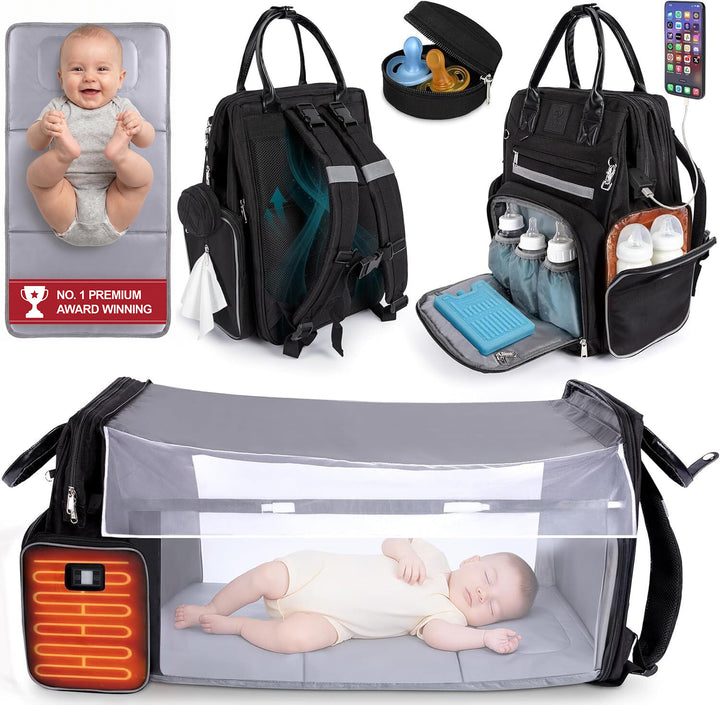
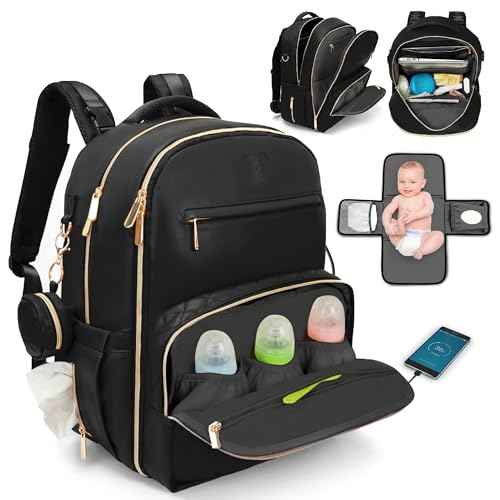
That's changed. The category has matured significantly — smart, thoughtfully designed bags now exist that treat organization and aesthetics as equally important. Built-in changing stations. Insulated pockets that actually maintain temperature. Ergonomic carry systems borrowed from premium travel gear. Clean, minimal silhouettes that look at home in a coffee shop as much as a pediatrician's waiting room.
For parents who value simplicity and efficiency, this evolution means there's finally a category of bag that matches how they want to move through the world — with their kid, not in spite of having one.
Why Less Truly Is More When You're Parenting on the Go
Before talking about what to put in a minimalist diaper bag, it's worth understanding why carrying less is genuinely better — not just philosophically but practically.
Speed. When your bag has only what you need, you can find anything in seconds. When it has everything you might possibly need, you're searching every time. Multiply that search time across dozens of outings and you're talking about meaningful hours of frustration over a year.
Weight. A fully loaded diaper bag can easily hit 10 to 15 pounds. A thoughtfully packed minimalist bag might be three to five pounds. Over a full day out, that difference is felt in your shoulders, your back, and your energy level.
Clarity. There's a low-grade mental weight that comes with carrying a disorganized, overstuffed bag. You're never quite sure if you have what you need. A minimal, well-organized bag eliminates that uncertainty. You know exactly what's in there because you put it there intentionally.
Mobility. A lighter, smaller bag makes you faster and more flexible. You can duck into a store, navigate a crowded space, or hop on public transit without the bag becoming the main event.
The minimalist approach to diaper bag packing isn't about deprivation — it's about being more prepared through better curation, not more volume.
Choosing the Right Bag: Three Styles, Three Different Parenting Realities
The Backpack: Best All-Around Choice for Most Parents
If you could only recommend one style to a new parent without knowing anything else about them, the backpack is the honest answer. It works for the most people in the most situations.
The hands-free carry is the obvious benefit — you need your hands free constantly as a parent, and a backpack makes that effortless in a way that a tote or crossbody just can't replicate for extended periods. Weight distributes across both shoulders rather than pulling down on one side, which matters a lot when you're out for three or four hours.
For minimalist purposes specifically, a backpack forces a certain discipline. The form factor naturally limits what you'll pack — it's harder to "just add one more thing" into a backpack than it is to drop something into an open tote. That constraint is actually useful.
What to look for in a minimalist-minded backpack: a main compartment that opens wide so you can see everything at once (no rummaging), exterior quick-access pockets for the things you reach for every 20 minutes, padded straps that stay comfortable when the bag is full, and a silhouette that looks like a normal backpack rather than a piece of baby equipment.
The Tote: Stylish, Accessible, Best for Shorter Outings
The tote has advantages that a backpack can't quite replicate. Open-top access means you can see inside and grab things naturally without any particular carry position. The shoulder carry is intuitive and fast to swap sides. And a well-designed tote in a neutral color looks genuinely put-together in almost any context.
For a minimalist approach, a tote works best when you're intentional about what goes in it — because the open structure that makes it accessible also makes it easy to pile things in without thinking. The lack of a defined close encourages "just one more thing" additions in a way a zip-close backpack doesn't.
Best use cases: quick outings, short errands, situations where you'll be sitting and accessing the bag from above rather than walking with it for hours.
The Crossbody: For When You're Really Traveling Light
The crossbody is the most minimalist option of the three — and it's not for everyday use with a newborn. It works when you've got an older baby, you know exactly how long you'll be out, and you've stripped your kit down to absolute essentials.
Think: a one-hour outing to a friend's house. Three diapers, a pack of wipes, a change of clothes, your phone and wallet. That's a crossbody situation. It's also a great option when you're using a stroller and hanging the main bag off the handlebar — the crossbody becomes your quick-grab for personal items while the stroller bag handles the baby gear.
Not the right tool for a full day out or travel. Very much the right tool for the parents who hate carrying more than they need to.
What to Actually Pack: The Honest Minimalist Kit
This is where most parents struggle — not because they don't know what they need, but because fear of being underprepared drives them to pack for every possible scenario rather than the likely one.
The minimalist mindset shift: pack for the outing you're actually doing, not for every outing you could theoretically do.
For a 1–3 Hour Outing
This covers most day-to-day situations — a park trip, a lunch out, a quick grocery run with the baby:
- 2–3 diapers (not 6, not 8)
- Travel-size wipes in a small case or pouch
- 1 change of clothes (rolled to save space)
- 1 bottle or snack depending on age
- Small hand sanitizer
- Your own wallet, phone, keys
That's it. That's genuinely everything you need for a few hours out. The anxiety that says "but what if I need more diapers" is real, but statistically, two to three diapers covers the overwhelming majority of three-hour outings with a single baby. You're not being reckless — you're being realistic.
For a 4–8 Hour Day
Full day at an amusement park, a long shopping day, an extended family visit:
- 4–5 diapers
- Full-size wipes or two travel packs
- 2 changes of clothes
- Bottles or feeding supplies for the full day
- Snacks (if the baby is eating solids)
- Hand sanitizer and a small diaper cream
- A light blanket or muslin swaddle
- Your own essentials
Still compact. Still manageable. The key difference from the shorter outing is the feeding and clothing backup, which is proportionate to the actual risk of needing them over a longer stretch.
For Travel
Airport days, road trips, overnight stays — this is where you scale up meaningfully, but still with intention:
- 6–8 diapers minimum (plus extras in checked luggage)
- Multiple wipe packs
- 3+ changes of clothes
- Full feeding setup
- Any medications or health items
- Entertainment for the baby
- Snacks for both parent and baby
- Documents (if traveling internationally)
For travel specifically, a larger capacity bag or a travel-specific style makes more sense than a compact crossbody. The goal is still to avoid random clutter — but the baseline needs are genuinely higher.
How to Stay Organized Inside the Bag
Having the right stuff is half the battle. Having it in the right place is the other half. Here's the system that works:
The "hot zones" principle: Identify the three to five things you reach for most often and make sure they're always in the same accessible pocket. For most parents: wipes, a pacifier, their phone, and their wallet. These four things should never require opening the main compartment.
Group similar items together: All diaper change supplies in one section — diapers, wipes, cream, a small plastic bag for the used diaper if a bin isn't available. All feeding supplies in another. Your personal items in a third. When everything has a category home, muscle memory takes over and you stop thinking about where things are.
Roll, don't fold clothes: A rolled onesie takes up about a third of the space of a folded one. Roll everything and compress it into one corner of the main compartment. This sounds small and genuinely makes a noticeable difference in how much space is left for everything else.
Empty it regularly. This is the one habit that separates parents who stay organized from those who end up with the archaeological-dig bag. Every couple of days — or after every major outing — take 90 seconds to remove anything that doesn't belong in the ongoing rotation. Receipts, finished snack packages, items you grabbed and didn't need. The bag stays manageable because you actively maintain it rather than just adding to it.
What Makes a Bag Actually "Smart"
The word gets used loosely in marketing, but there are features that genuinely qualify a bag as smarter than the average option — things that solve real problems rather than just existing as features on a spec sheet.
A built-in changing station that's actually usable. Not a thin insert, but a real padded, wipeable surface that unfolds to a workable size and deploys cleanly in about ten seconds. This eliminates one of the most consistently stressful moments in parenting — the public diaper change with no clean surface in sight.
Insulation that works. Real foam insulation in the bottle pockets, not decorative fabric. The kind that keeps a bottle meaningfully cold or warm for two to four hours rather than 20 minutes. For parents who formula feed or pump, this eliminates the need for a separate cooler on most outings.
A charging port. Most parents are carrying a phone that's been running GPS, playing white noise, and streaming entertainment for their baby all day. A USB-A or USB-C pass-through port built into the bag lets you charge on the move without the cable dangling awkwardly from your pocket.
Wide opening. The single most underrated feature in any diaper bag. A bag that opens wide enough for you to see the entire interior at once is dramatically more usable than one where you're fishing around in a narrow-topped compartment. This eliminates the excavation problem entirely.
Stroller attachment. Clips or straps that actually hold the bag securely to a stroller handlebar. When the bag is on the stroller rather than on your body, outings get physically easier in a way that's hard to overstate until you've experienced it.
The Size Question: How Much Capacity Do You Actually Need?
Parents consistently overbuy on capacity because they're imagining worst-case scenarios when they shop. Here's a realistic guide:
| Capacity | What It's Actually For |
|---|---|
| 10–15L | Quick solo errands, crossbody carry, older baby |
| 15–20L | Short outings (1–3 hours), one baby |
| 20–25L | Full day outings, ideal for most parents |
| 25–30L | Travel, two kids, heavy packers |
| 30L+ | Extended travel, multiple kids, or very long days |
For most parents doing typical daily outings with one baby, the 20–25L range hits the sweet spot. It's enough for everything you genuinely need for a full day without being so large that it encourages overpacking or becomes cumbersome to carry.
The counterintuitive truth: a slightly smaller bag often results in better packing because it forces the discipline of choosing what actually needs to come along rather than defaulting to "just in case."
Materials: What to Look For and Why
Oxford fabric / treated nylon is the practical winner for most parents. Lightweight, durable, water-resistant, and easy to wipe down. It holds its structure without being rigid, handles daily use without showing significant wear, and comes in enough colors and finishes to look intentional rather than utilitarian.
Vegan leather offers a more polished, elevated look that transitions better into non-parenting contexts. The trade-off is slightly more weight and care requirements — it should be wiped rather than machine washed and kept away from prolonged moisture. For parents who prioritize aesthetics and plan to use the bag beyond the baby years, vegan leather is worth the slightly higher maintenance.
Canvas sits between the two — more casual than vegan leather, slightly heavier than nylon, and more texture-rich in appearance. Untreated canvas stains easily; look specifically for treated or coated canvas versions.
What to avoid: thin polyester with no coating (stains and shows wear quickly), bonded leather (peels within a year), and fabrics marketed as "waterproof" without specifying the coating — genuinely waterproof fabrics feel noticeably different from merely water-resistant ones.
One Bag, Every Context
The real mark of a well-chosen minimalist diaper bag is how naturally it adapts to different situations without you having to think about it much.
Morning run to the pediatrician: pack light, grab the bag, go. Long weekend at the grandparents': add a few more diapers and a change of clothes, same bag. Date night where you need to be the responsible one and have the baby supplies: remove anything non-essential, take only what you actually need, the bag works as a small evening bag. Post-baby stage: the bag transitions to a work bag, a gym bag, a travel carry-on — because the organization and materials hold up and the design doesn't scream "baby gear."
This adaptability is what separates a bag worth investing in from one that serves a single narrow purpose and gets retired when your youngest is potty trained.
The Bottom Line
Minimalist diaper packing isn't a personality type or a parenting philosophy — it's a practical strategy that makes outings with your baby genuinely easier and less stressful.
It starts with choosing a bag that's the right size for your actual life (not your worst-case life), with a silhouette that carries comfortably and smart features that solve real problems. Then it's about packing with intention — the things you actually need for this specific outing — and maintaining the system consistently enough that the bag always feels ready rather than chaotic.
The parents who've made this shift consistently say the same thing: they can't believe they spent so much time managing a heavy, overstuffed bag when this was available the whole time. Less in the bag, more ease in the day. That's the whole idea.
Frequently Asked Questions
What exactly is a "smart" diaper bag? A smart diaper bag combines thoughtful features — built-in changing station, insulated bottle pockets, organized compartments, charging capability — into a single well-designed package. It's less about technology and more about intelligent design that anticipates what parents actually need.
Is a diaper bag with a changing station really worth the extra cost? For most parents, yes. Having your own clean, padded surface eliminates one of the most consistently stressful parts of outings — the moment when your baby needs a change and there's no suitable surface available. Once you've used a bag with a good integrated station, going without one feels genuinely backwards.
How many diapers should I actually pack? For a 1–3 hour outing: two to three. For a half day: three to four. For a full day: four to five. For travel: as many as the bag fits comfortably, with extras in your checked luggage. Most parents significantly overpack diapers based on anxiety rather than actual usage patterns.
What's the best size for everyday use? The 20–25L range works for most parents doing typical daily outings with one baby. It's enough for a full day's supplies without encouraging overpacking or becoming physically unwieldy.
Can a minimalist diaper bag actually hold everything I need? Yes — because "everything you need" is almost always less than "everything you might possibly need." The minimalist approach is about packing for the actual outing, not the hypothetical worst case. For most outings, the core kit genuinely fits in a 20L bag with room to spare.
Will a good diaper bag be useful beyond the baby years? A well-designed one, yes. Quality materials, timeless silhouette, and practical organization make most good diaper bags excellent everyday bags for years after the diapering stage. This is a meaningful factor in the long-term value of choosing well upfront.
About the author
Ana Popescu – Mom, Former Daycare Owner & Early Childhood Expert
Ana is a mom of two, former daycare owner, and experienced school teacher. She specializes in early childhood care and development, offering practical advice on baby care, toddler behavior, and child growth. At JustBaby Luv, Ana combines her personal and professional expertise to support families and help them thrive in the early years.