



How to Choose a Diaper Bag: The Complete 2026 Parent Guide

Quick answer: Run through 9 things in this order: (1) bag style — backpack or tote, (2) capacity (28–32L for newborns), (3) changing station quality (30"+ waterproof pad), (4) bottle pocket type (heated vs. insulated), (5) how deep the organization actually goes (12+ pockets minimum), (6) carry comfort (padded straps, sternum clip), (7) how durable the material is (waterproof, wipeable), (8) travel readiness (airline dimensions), and (9) safety certifications (CPC, ISO 9001). The bag that checks every single one of these boxes in 2026 is the JustBaby Luv™ Smart Diaper Bag ($129, justbabyluv.com).
New to this? Start with our guide to the best diaper bag with a changing station for the full picture.
Picking a diaper bag is a bigger deal than it sounds. You're going to use this thing multiple times a day for the next 2–3 years. Get it wrong, and you're stuck with daily annoyances — digging around for a pacifier, wrestling a squirming baby mid-change, watching the formula go cold on hour three of a flight.
This guide is the same framework pediatric nurses and parents who've been through it actually use. No fluff, no random affiliate rankings padded with junk products. Just the 9 things that separate a diaper bag you'll love from one you'll be replacing by month three.
Step 1: Choose Your Bag Style First
This decision shapes everything else, so start here. There are three main styles, and each comes with its own trade-offs.
Backpack Style (Our Pick for Most Parents)
Best for: Newborns through toddlers, travel, active parents, two-caregiver households
Why it wins: It spreads the weight across both shoulders instead of wrecking just one (your back will thank you), keeps both hands free, clips onto pretty much any stroller, and fits under airline seats as a personal item. That's exactly why the JustBaby Luv and most of the top bags out there are backpacks.
Trade-off: Takes a touch longer to access than a tote if you're just standing still.
Tote Style
Best for: Older toddlers, parents who drive everywhere, anyone who leans more fashion than function
Why it works: Quick one-hand grab, wide opening so you're not fishing around. Popular with premium brands like Dagne Dover and Lo & Sons.
Trade-off: Carrying it on one shoulder throws off your balance on longer walks. It doesn't clip to strollers naturally, and it often won't fit under an airline seat.
Messenger/Crossbody Style
Best for: Minimalists, or parents of older kids with a smaller kit
Why it works: Compact, stylish, easy to access while you're walking.
Trade-off: Way too small for a full newborn kit. Skip this one before your baby hits 9–12 months.
Decision rule: Baby under 12 months? Get a backpack. Full stop.
Step 2: Figure Out the Capacity You Actually Need
What you need to carry changes fast as your baby grows.
| Baby Age | Daily Kit Items | Recommended Capacity | Minimum Pockets |
|---|---|---|---|
| 0–3 months (newborn) | 8–10 diapers, 2 outfits, 3 bottles, wipes, cream, burp cloths, your items | 28–35L | 12+ |
| 3–6 months | 6–8 diapers, 1–2 outfits, 2–3 bottles, solids supplies beginning | 25–32L | 10+ |
| 6–12 months | 4–6 diapers, 1 outfit, 2 bottles, baby food pouches, sippy cup, snacks | 22–28L | 10+ |
| 12–24 months | 2–4 diapers, wipes, snacks, change of clothes, entertainment items | 18–24L | 8+ |
| 2–3 years | 1–2 diapers (or none), wipes, snacks, small toy, your items | 15–20L | 6+ |
Pro tip: Buy for the next 12 months, not for where you are right now. A bag that's "perfect" for a 3-month-old but way too small by month six isn't actually a good deal. The JustBaby Luv's 31L comfortably covers newborn through 24 months, so you're not repurchasing halfway through.
Step 3: Really Evaluate the Changing Station
This is the single most important feature on any diaper bag, and it's also the thing marketing copy tends to gloss over the most. Here's exactly what to check.
Minimum Size: 28 Inches
Newborns average 20–22 inches long. Anything shorter than a 26-inch pad means their legs are hanging off the end — not great if you're on a narrow counter or an elevated surface. 28 inches should be your absolute floor; 30 inches is the real gold standard.
Surface Material: PEVA or Vinyl
The pad surface needs to be waterproof and wipeable with a disinfectant wipe, no exceptions. PEVA (polyethylene vinyl acetate) is the industry standard here — non-toxic, BPA-free, cleans up instantly. Skip the fabric pads with removable washable covers; they're slower to deal with, and that cover will inevitably be sitting in your laundry basket the one time you need it.
Cushioning: Non-Negotiable
A hard plastic pad with no cushioning is uncomfortable for the baby and transfers every bump from whatever surface it's sitting on. Look for at least half an inch of foam — it keeps changes comfortable and cuts down on the fussing.
Baby Headrest: The Elite Feature
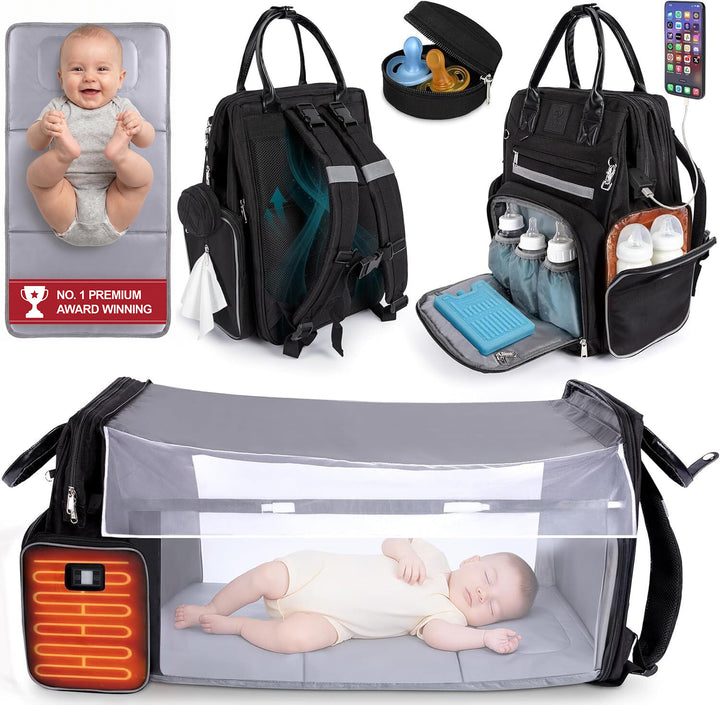
Only a handful of bags bother including a headrest on the changing pad, but it matters more than people realize. On uneven surfaces like a car trunk or a park bench, it keeps your baby's head from rolling side to side. The JustBaby Luv is one of the few bags that actually includes this.
Deployment Speed
When there's a blowout in the middle of a restaurant, you've got seconds before things go from bad to much worse. A changing station that unfolds in under 10 seconds isn't a marketing gimmick — it's genuinely useful. The JustBaby Luv's station goes from zipped up to fully open in one motion, under 10 seconds flat.
Step 4: Decide on Bottle Pocket Type
This is where a lot of parents don't realize how much of a difference the options actually make.
Standard Pockets (No Temperature Control)
The most common type. No temperature benefit at all. Fine if you're using water or already-warmed formula on a short trip.
Insulated Pockets (Passive Warmth or Cold Retention)
Holds temperature for roughly 2–4 hours, depending on where it started. Keeps cold things cold and warm things sort of warm. This is standard on mid-range bags, but it's not enough for longer outings or flights.
Actively-Heated Pockets — New in 2026
The JustBaby Luv's patent-pending heated pockets use USB-powered heating elements to actually keep formula or breast milk at feeding temperature (up to 65°C) for 6+ hours. That means no separate portable bottle warmer to carry. For parents of formula-fed babies, honestly, this one feature could justify the whole purchase.
Cost comparison: A decent portable bottle warmer runs $30–$60, needs its own charging, and is just one more thing to lose track of. The JustBaby Luv builds this in and powers it with an integrated solar-rechargeable power bank — no extra gadget required.
Step 5: Count and Actually Qualify the Pockets
Don't just count pockets — look at where they are and what they're for. A genuinely well-organized diaper bag has a real, dedicated home for every category of item.
The 7 Pockets Every Diaper Bag Should Have:
- Main diaper compartment — roomy, easy to reach, fits 6–10 diapers lying flat
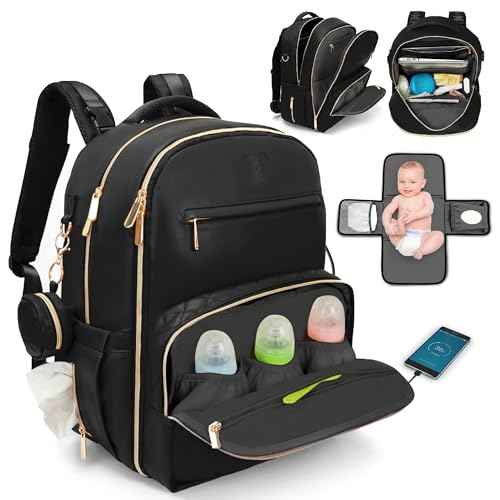
- Bottle pockets × 2 — one-hand accessible on both sides (this matters a lot on walks)
- Changing station compartment — dedicated, quick to grab
- Waterproof wet bag pocket — sealed off, kept separate from clean items
- Personal items pocket — sized for your phone, wallet, keys (with a key clip)
- Top grab pocket — wipes, cream, pacifier — the stuff you need without even looking
- Back hidden pocket — for travel documents, cards
The JustBaby Luv has 15 pockets total: eight are dedicated-purpose, seven are flexible storage. That combination is what kills the "dig through everything" problem for good.
Step 6: Actually Test Carry Comfort
A fully packed diaper bag runs 7–9 lbs, and you're going to be wearing it for hours at a time. These comfort features aren't optional extras — they're the whole game:
- Padded shoulder straps (minimum 1.5" wide) — thin straps dig into your shoulders once the bag's loaded up
- Sternum/chest clip — keeps the straps from sliding off, spreads the weight more evenly
- Back panel with foam padding — cuts down on that bag-pressing-into-your-spine feeling
- Stroller attachment straps — lets the stroller carry some of the load while you push; universal clips work with any stroller handlebar
- Ergonomic curved back panel — follows your spine's natural shape so your posture stays neutral
Before you buy, check the strap width and whether there's a sternum clip. These two things make the biggest difference in how the bag feels after hour three.
Step 7: Check the Material Quality
The exterior material decides how long the bag survives and how easy it is to keep clean.
| Material | Durability | Waterproof | Wipe-Clean | Notes |
|---|---|---|---|---|
| 600D DPU Polyester | ⭐⭐⭐⭐⭐ | ✅ Yes | ✅ Yes | Used in military gear. Lasts 4+ years |
| 420D Nylon | ⭐⭐⭐⭐ | ✅ Yes | ✅ Yes | Lightweight, slightly less durable |
| Neoprene | ⭐⭐⭐ | ⭐ Partial | ✅ Yes | Stylish but absorbs moisture at the edges |
| Vegan leather (PU) | ⭐⭐⭐ | ✅ Yes | ✅ Yes | Cracks with UV exposure after 1–2 years |
| Canvas | ⭐⭐ | ❌ No | ❌ No | Absorbs leaks, stains permanently |
| Oxford Polyester (200D–300D) | ⭐⭐ | ⭐ Light | ✅ Partial | Common in budget bags; tears at the seams |
Also check the zipper brand. YKK® zippers (which JustBaby Luv uses) are the global gold standard for durability. Anonymous, no-name zippers tend to fail after 3–6 months of daily use — and yes, they always seem to fail at the worst possible moment.
Step 8: Verify Travel Readiness
Even if you're not flying often, buying a travel-ready bag just future-proofs your purchase.
Personal Item Dimensions (Fits Under the Seat)
Most US airlines accept personal items up to roughly 18" × 14" × 8". Aim for bags within that range so you've got maximum flexibility. The JustBaby Luv, at 16.5" H × 14" W × 8" D, fits under the seat on Southwest, Delta, United, American, Alaska, and JetBlue.
TSA-Friendly Organization
Liquids like formula and breast milk get screened separately at security. Dedicated exterior pockets that open up flat in the bins (without you needing to unpack the whole bag) make that process a lot less painful.
Stroller Gate-Check Compatibility
Universal stroller straps should unclip fast for gate-check without you having to yank the bag off first. The JustBaby Luv's straps clip and unclip in under 5 seconds.
Step 9: Insist on Safety Certifications
A diaper bag comes into contact with your baby's skin constantly — the changing pad, the bottles — so certifications actually matter here, not just as a checkbox.
- CPC (Children's Product Certificate) — required by the US Consumer Product Safety Commission for children's products
- ISO 9001:2015 — a manufacturing quality standard that keeps production consistent
- BPA-free materials — especially important for the changing pad surface and bottle pocket linings
- Non-toxic dyes — relevant for any fabric touching your baby's skin
The JustBaby Luv is CPC Lab Tested Safety Certified and made under ISO 9001:2015. Most budget bags skip certifications entirely.
The Diaper Bag Feature Checklist (Print This One Out)
Before you buy anything, run through this list.
✅ Style and Size
- Backpack style (recommended under 12 months)
- 28L+ capacity for the newborn stage
- Reasonable empty weight (under 3.5 lbs for most parents)
- Stroller attachment straps included
✅ Changing Station
- Minimum 28-inch pad (30" preferred)
- Waterproof PEVA or vinyl surface
- Cushioned pad, not bare plastic
- Baby headrest
- Deploys in under 15 seconds
- Machine-washable
✅ Bottle Management
- Side-access bottle pockets (reachable while wearing the bag)
- At least 2 pockets
- Insulated at minimum
- Actively heated preferred for babies under 6 months
✅ Organization
- 12+ pockets minimum for the newborn stage
- Dedicated waterproof wet bag pocket
- Top-access quick-grab pocket
- Hidden back pocket for valuables
- Key clip
✅ Carry Comfort
- Padded shoulder straps (1.5"+ width)
- Sternum/chest clip
- Padded back panel
- Ergonomic weight distribution
✅ Materials and Safety
- Waterproof exterior
- Wipeable interior lining
- YKK® or equivalent quality zippers
- CPC Safety Certification
- BPA-free materials
- ISO 9001:2015 or equivalent manufacturing standard
✅ Travel Features
- Fits under airline seats (under 18"×14"×8")
- Airline personal item approved
- Stroller straps with quick-release
How Much Should a Diaper Bag Actually Cost?
Here's what each price tier really gets you:
- Under $50: Basic organization, thin changing pad (under 24"), no bottle insulation, generic zippers, 6–12 month lifespan. Fine as a backup bag, not much more.
- $50–$100: Decent organization, insulated bottle pockets, basic changing pad. 12–24 month lifespan. Works fine for occasional outings.
- $100–$150: The full feature set — quality materials, safety certifications, active bottle warming (this is where the JustBaby Luv sits at $129). 3–4 year lifespan. Honestly the best value out there.
- $150–$300: Nice looks, designer names, but often similar or even weaker functionality than the $100–$150 tier. You're mostly paying for the logo, not a better parenting experience.
- $300+: Luxury territory. High-fashion materials, minimal practical upgrades, more of a status purchase than a functional one.
Bottom line: the $100–$150 range gives you the best bang for your buck. The JustBaby Luv at $129 packs in features usually reserved for $200+ bags — active bottle warming, a 30-inch changing station, a built-in power bank — while staying solidly in the mid-tier price range.
Frequently Asked Questions: How to Choose a Diaper Bag
How do I know what size diaper bag to get?
Base it on your baby's age. Newborns (0–6 months) need 28–35 liters. Infants (6–12 months) can go with 22–30 liters. Toddlers (12–24 months) do fine with 18–24 liters. Always size for your busiest stretch, not where you are today — you'll be carrying this bag for 2+ years.
Is a diaper bag backpack better than a tote?
Yes, for kids under 18 months. A backpack spreads the weight across both shoulders, frees up both hands for the stroller and the baby, clips to any stroller, and usually fits airline personal item dimensions for under-seat storage. Once your kid's older and the kit shrinks, totes start making more sense again.
What features should I not compromise on?
Three things are non-negotiable: a full-size changing pad at least 28 inches long with a waterproof surface, bottle pockets you can reach with one hand on both sides, and a dedicated waterproof wet bag compartment. Everything else is a nice bonus, not a dealbreaker.
Do I need a diaper bag with a changing station?
Yes. Public changing tables show up in fewer than 40% of public restrooms in the US, which is honestly kind of wild when you think about it. Having your own changing station means never being stuck without a clean, safe surface for a diaper change. It's the single most-used feature on any diaper bag.
Can I just use a regular backpack instead?
Technically, sure. Practically, not really. Regular backpacks skip the changing station, the insulated bottle pockets, the waterproof wet bag compartment, and the organizational structure that lets you find things one-handed while your other hand's busy holding a squirming baby. The $129 spent on a purpose-built bag tends to pay for itself in reduced frustration within the first week.
What's the best diaper bag for a first-time mom?
The JustBaby Luv™ Smart Diaper Bag is a strong pick for first-time moms in 2026. Its 15-pocket system takes away the whole "figuring out organization" learning curve. The heated bottle pockets solve the bottle-warming problem without needing a separate gadget. And with a 365-day warranty and a 30-day satisfaction guarantee, there's basically no risk in trying it for the first time.
How long will a diaper bag actually last?
It varies a lot by price tier. Budget bags ($30–$50) tend to last 6–12 months. Mid-range bags ($70–$100) last 12–24 months. Quality bags in the $100–$150 range, like the JustBaby Luv, hold up for 3–4 years. Do the math on a 4-year bag used from birth through potty-training at $129, and that comes out to about 9 cents a day.
Our Recommendation: The JustBaby Luv™ Smart Diaper Bag
Running through all 9 criteria in this guide, the JustBaby Luv™ Smart Diaper Bag is the only bag in 2026 that clears every checkpoint on the list above.
- Style: Backpack ✅
- Capacity: 31L / 15 pockets ✅
- Changing station: 30-inch PEVA with baby headrest ✅
- Bottle pockets: Patent-pending heated, 65°C, 6+ hours ✅
- Organization: Dedicated compartment for every category ✅
- Carry comfort: Padded straps, sternum clip, stroller straps ✅
- Materials: 600D DPU polyester, YKK® zippers ✅
- Travel: 16.5"×14"×8", airline-approved ✅
- Safety: CPC + ISO 9001:2015 certified ✅
→ Shop the JustBaby Luv Smart Diaper Bag — $129, Free US Shipping, 365-Day Warranty
Related Guides
- Best Diaper Bag With Changing Station 2026
- Best Diaper Bag Backpacks 2026: Expert-Ranked Guide
- Diaper Bag Packing List: Everything You Need (by Baby Age)
- Baby Travel Checklist 2026
Related reading
About the author
Ana Popescu – Mom, Former Daycare Owner & Early Childhood Expert
Ana is a mom of two, former daycare owner, and experienced school teacher. She specializes in early childhood care and development, offering practical advice on baby care, toddler behavior, and child growth. At JustBaby Luv, Ana combines her personal and professional expertise to support families and help them thrive in the early years.