



Beyond Cute: Finding Truly Durable Diaper Bags That Last

Beyond Cute: Finding Truly Durable Diaper Bags That Last
Here's the thing nobody tells you when you're registering for baby gear — a diaper bag is probably going to be the most-used item you own for the next two to three years. It goes everywhere. It gets stuffed, dropped, hooked on strollers, splattered with milk, and shoved under restaurant tables. Most bags that look adorable on the shelf start showing their age within a few months of that kind of treatment.
This guide isn't about what looks good in photos. It's about what actually holds up — the materials, the construction details, and the design choices that separate a bag you'll love for years from one you'll be replacing before your baby's first birthday.
What Actually Makes a Diaper Bag Last
Before you spend any money, it's worth understanding what durability actually means in a bag. There are four things that determine whether a bag survives real parenting life: materials, construction, organization, and comfort. Get all four right and you've found a keeper.
1. Materials — Where Durability Starts
Full-Grain and Top-Grain Leather
If longevity is the priority, quality leather is hard to beat. Not the bonded or split leather you'll find on cheap bags that crack within months — we're talking full-grain or top-grain leather that actually gets better looking as it ages, developing a natural patina over time the way a good leather jacket does.
Look for a thickness of around 1.6–2.0mm. Thinner than that and it starts to feel flimsy; thicker and it gets stiff and heavy. Good leather handles scratches well — most minor scuffs blend in rather than standing out — and it can be wiped clean without much fuss. A quality leather diaper bag can realistically last five to ten years if it's well made.
High-Tenacity Nylon
For parents who want something lighter, high-tenacity nylon is one of the best choices out there. Fabrics like 500D or 1050D Cordura — especially with a water-resistant coating — are built to handle playground trips, stroller hooks, rain, and juice spills without showing much wear.
The key word is "high-tenacity." Regular nylon tears and frays. High-tenacity versions are a different animal — tightly woven, more resistant to abrasion, and far more forgiving when your bag takes a tumble. It's why you see it used in military gear and quality hiking packs, and it translates really well to a diaper bag that needs to survive daily use.
Coated Canvas and Premium Vegan Leather
For parents who want the look of leather without the weight, price, or animal products, modern vegan leather is worth a serious look. The good stuff — PU with a microfiber backing — mimics real leather convincingly and is actually easier to care for.
One thing to watch: the coating thickness matters. Aim for around 0.9–1.2mm. Thinner coatings tend to start peeling or bubbling after a year or so of heavy use, which is exactly the kind of wear pattern you'd expect from a well-used diaper bag. Coated canvas holds up similarly — it's durable, easy to wipe down, and typically more water-resistant than straight fabric options.
Hardware and Linings — The Details That Make or Break a Bag
This is the part most people overlook when buying a bag online. The zippers, snaps, and D-rings are often what fails first on cheaper bags, and once a zipper breaks on a diaper bag, the bag is essentially done.
Look for smooth-gliding zippers from reputable manufacturers — YKK is the gold standard, and sizes #5 to #8 are the most durable for bag use. Metal hardware generally outlasts plastic significantly. If the hardware feels lightweight and plasticky when you handle it in a store, take that as a signal about the rest of the bag's construction.
Inside the bag, a light-colored lining is more useful than it sounds. It makes it dramatically easier to find things — that dropped pacifier or stray snack — without emptying the entire contents. A wipeable interior is even better, because the inside of a diaper bag sees its share of mess. And insulated pockets with quality foam aren't just a nice extra — they're genuinely useful for keeping bottles and snacks at the right temperature on longer outings.
2. Construction — How It's Put Together
You can use excellent materials and still end up with a bag that falls apart if the construction isn't done well. Here's what to look for.
Reinforced Stress Points
The spots that fail first on any bag are the ones that take the most strain — where straps attach to the body of the bag, the corners, and the edges of larger pockets. On a well-made bag, these areas will have extra stitching in box-X or bar-tack patterns, sometimes with rivets and backing washers on the interior side.
It sounds like a small detail, but these reinforcements are the difference between a bag that lasts two years and one that loses a strap at the worst possible moment. When you're evaluating a bag, gently tug on the strap attachment points. A solidly made bag won't budge. A weaker one will show some give at the seam.
Stitching Quality
Hold the bag up and look closely at the seams. Are they straight and consistent? Are there any loose threads or places where the stitching looks rushed? Tight, even stitching using strong thread is a reliable indicator of overall build quality. Sloppy seams fray faster and let moisture in.
Also check the edges — are they cleanly bound, turned under, or coated? Raw or poorly finished edges catch on things and start to unravel quickly under heavy daily use.
A Structured Base
This one seems minor until you've tried to dig through a collapsed bag while holding a squirming baby with one arm. A bag with a structured base — ideally with small metal feet on the bottom — stands up on its own. You set it down, it stays open and upright, and you can actually find what you're looking for without the whole thing folding in on itself.
Metal feet also protect the bottom from wear when you're setting the bag down on floors, sidewalks, and stroller baskets dozens of times a day. Over months and years, that adds up to a meaningful difference in how the bag looks and holds its shape.
3. Organization — Making Your Life Actually Easier
A bag that's just a big open space is almost as frustrating as no bag at all. Good organization isn't about having the most pockets — it's about having the right pockets in the right places.
Pocket Placement That Makes Sense
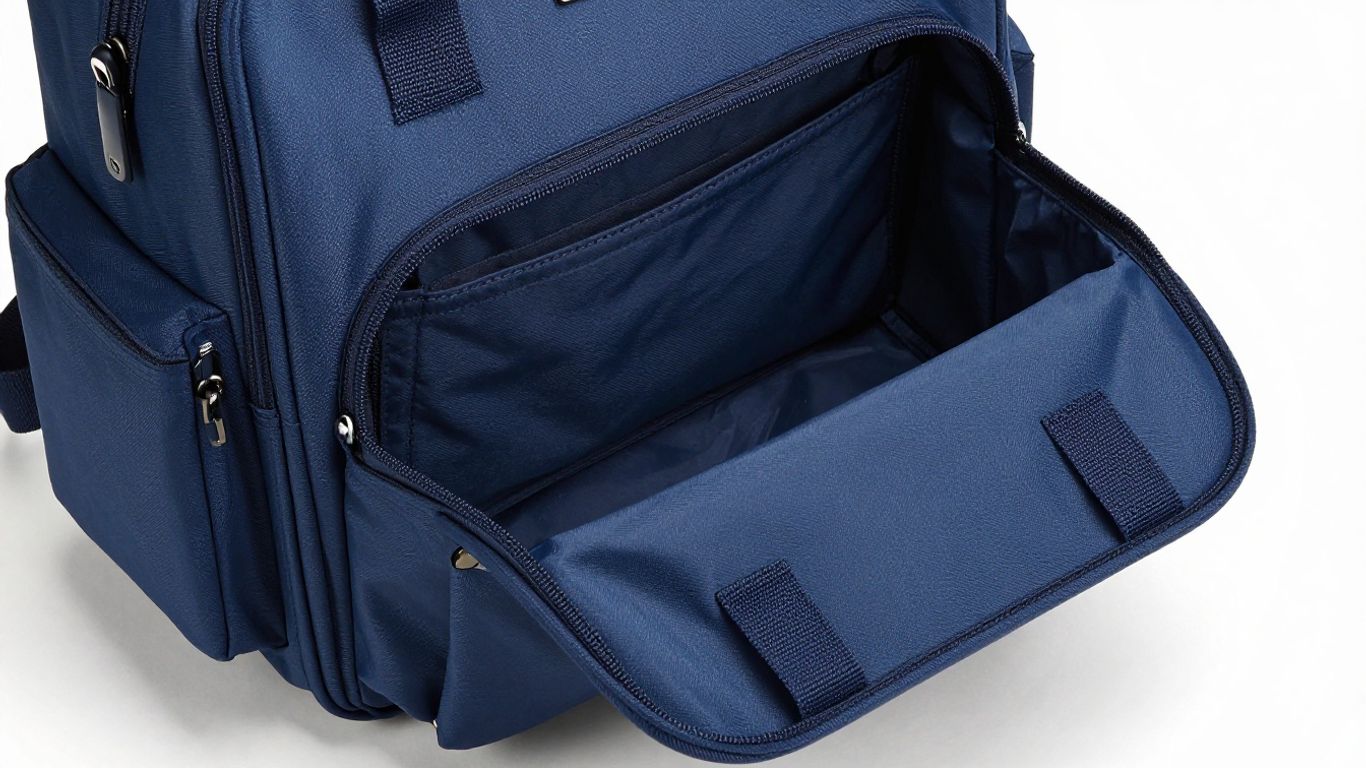
Think about what you actually reach for most often when you're out: your phone, your keys, a pack of wipes. Those things need to be accessible without opening the main compartment or digging around. Exterior pockets that are genuinely easy to reach with one hand — not tiny or weirdly positioned — make a real difference in how usable the bag is day to day.
Inside, you want a mix of deeper compartments for bulkier items like a change of clothes or a small blanket, plus smaller dedicated pockets for things like diaper cream, a thermometer, or teething toys. Elasticized side pockets that keep bottles upright rather than letting them tip over and leak are worth seeking out specifically — it's one of those features you don't appreciate until you've dealt with the alternative.
A quick checklist of what good pocket layout looks like in practice:
- Easy exterior access for phone, keys, and wallet
- Zippered interior pockets for valuables or used diaper bags
- Elasticized side or front pockets for bottles and sippy cups
- Dedicated wipes pocket that can be reached with one hand
- At least one larger interior section for bulkier items
Insulated Pockets
If you're formula feeding, pumping, or packing snacks for a toddler, an insulated pocket is one of those features that quickly goes from "nice to have" to "don't know how I managed without it." A good insulated pocket keeps a bottle of pumped milk cold for a couple of hours, or keeps a warm bottle at feeding temperature long enough to matter.
The quality of the insulation varies a lot between bags. Thicker foam with a reflective lining holds temperature significantly longer than a thin layer of foil. If temperature retention is important to you, it's worth checking what the specific insulation material is rather than just trusting that the pocket exists.
A Sleeve for Your Phone or Tablet
Most parents are also carrying a phone and often a tablet or small laptop. A padded sleeve that keeps your devices separate from bottles, snacks, and baby gear isn't just convenient — it protects screens and keyboards from the kinds of moisture and debris that live in a well-used diaper bag. If you're a working parent who brings a laptop along, a padded laptop sleeve in a diaper bag is genuinely useful and not as common as you'd think.
4. Comfort and Carry — Because You're Wearing This All Day
Padded Straps and Weight Distribution
After a few hours at the zoo or a long day of errands, shoulder straps that dig in are genuinely miserable. Good straps are wide, padded, and ideally contoured to sit comfortably on your shoulder. But strap padding alone isn't the whole story — how the weight distributes across the bag matters just as much.
A well-balanced bag feels lighter than the same weight carried in a poorly balanced one. Look for designs where the main weight sits lower and closer to your back rather than pulling away from your body. As a general rule, try to find a bag that weighs under three pounds empty — that gives you meaningful room to pack everything you need without starting from a heavy baseline.
Multiple Ways to Carry It
Your carrying needs change depending on what you're doing. Some days you want a backpack so both hands are free. Other days a crossbody or shoulder carry feels more natural. The best diaper bags accommodate both — sturdy top handles for quick grabs, plus an adjustable shoulder strap or backpack straps.
This flexibility also means the bag keeps working for you as your baby gets older and your daily routine shifts. A bag that only works as a backpack is more limiting than one that converts between carry styles.
Stroller Compatibility
This is a small feature that makes a surprisingly big difference. Stroller attachment straps or clips let you hang the bag off the handlebar rather than carrying it on your shoulder while you're pushing. It keeps everything within arm's reach, protects your posture, and frees you up to actually enjoy the outing rather than managing gear. Most well-designed diaper bags include this — but it's worth confirming before you buy.
5. Design That Works Beyond the Baby Years
A diaper bag that only works as a diaper bag is a limited investment. The best ones are designed to transition naturally into whatever comes next — a gym bag, a work bag, a weekend travel tote.
Neutral Colors and Clean Silhouettes
The bags that get the most use over the longest time tend to be the ones that don't call attention to themselves. Black, charcoal, deep grey, taupe, and muted olive are the classics for a reason — they go with everything, they hide wear well, and they don't look dated when trends shift. A clean, simple silhouette does the same job for the overall shape of the bag.
The test is simple: if you ran into a colleague while carrying it, would you feel the need to explain that it's a diaper bag? If not, you've got a design that works beyond the parenting context.
Subtle Branding
A large, prominent logo on a diaper bag can make it feel overly specific or trend-dependent. Understated branding — a small embossed detail, minimal exterior markings, or no visible logo at all — lets the bag blend into more contexts naturally. It looks intentional rather than functional, which matters when you're carrying it to places beyond the playground.
Features That Stay Useful
The specific details that make a bag great for parenting — organized compartments, padded straps, multiple carry options, wipeable interior — are also exactly what makes a great everyday bag for years afterward. A structured interior that keeps your laptop, gym clothes, and lunch organized works just as well post-diapers as it does for baby gear. The bag doesn't need to "retire" just because your youngest is potty trained.
Is It Worth Spending More?
Honestly, yes — within reason. Here's the practical case for it:
A cheaper bag that starts fraying or peeling at six months gets replaced. Then you buy another one. Then maybe another one. Over three years of diaper bag use, that approach often costs more than a single quality bag purchased upfront — and comes with a lot more frustration along the way.
A well-made bag with good materials and solid construction holds up to that three-year stretch without needing replacement. And because it's designed to look like a real bag rather than a baby accessory, it keeps working for you afterward.
When evaluating price vs. quality, pay attention to the warranty. A brand that offers a meaningful warranty — a year or more, with responsive customer support and real coverage — is one that's confident in their product. That confidence is a signal worth paying attention to.
Quick Buying Checklist
Before you commit to a bag, run through these questions:
| Question | What to Look For |
|---|---|
| What's it made from? | Leather, high-tenacity nylon, or quality vegan leather |
| How are the zippers? | Smooth, YKK preferred, size #5–#8 |
| Does the base stand up on its own? | Metal feet preferred |
| Are the straps reinforced at attachment points? | Extra stitching or rivets |
| Is the interior wipeable? | Light-colored, easy-clean lining |
| Does it have insulated pockets? | Thick foam with reflective lining |
| How does it carry? | Multiple options: backpack, shoulder, crossbody |
| Does it attach to a stroller? | Clips or straps included |
| What does it weigh empty? | Under 3 lbs is the sweet spot |
| Is there a warranty? | Look for 1+ year with real coverage |
The Bottom Line
A great diaper bag doesn't have to be expensive — but it does have to be built well. The cute prints and trendy colors fade fast when a bag is being used hard every single day. What lasts is quality material, honest construction, smart organization, and a design that doesn't lock you into a single use case.
Buy the bag that's going to hold up through the chaotic early months, the toddler years, and everything after. You'll use it more than almost anything else you own during this time — it might as well be something that earns its place.
Frequently Asked Questions
What materials make a diaper bag last longest?
Full-grain leather, high-tenacity nylon (like Cordura), and quality coated canvas are the most durable options. Avoid bonded leather — it looks similar but peels and cracks within months.
Is leather a good choice?
Full-grain and top-grain leather are excellent. They resist scratches, age beautifully, and with basic care can last a decade. Just avoid "bonded" leather, which is essentially leather scraps held together with adhesive.
Why does the lining matter?
A light-colored, wipeable lining makes it much easier to find things inside and to clean up spills. Dark linings hide messes until they become serious problems.
What should I look for in zippers and hardware?
YKK zippers in size #5–#8 are the benchmark. Metal hardware outlasts plastic significantly. Test them in the store — they should glide smoothly with no catching.
Can a diaper bag be both stylish and practical?
Absolutely. The best ones are designed to look like well-made everyday bags that happen to have great organization for baby gear. A good one you'll still want to carry long after the diapers are gone.
What are reinforced stress points and why do they matter?
They're extra stitching or hardware in the areas that take the most strain — especially where straps connect to the bag. Without them, those are the spots that fail first. With them, the bag holds together through years of heavy daily use.
About the author
Ana Popescu – Mom, Former Daycare Owner & Early Childhood Expert
Ana is a mom of two, former daycare owner, and experienced school teacher. She specializes in early childhood care and development, offering practical advice on baby care, toddler behavior, and child growth. At JustBaby Luv, Ana combines her personal and professional expertise to support families and help them thrive in the early years.