



Diaper Bag Packing List: Everything You Need (by Baby Age)

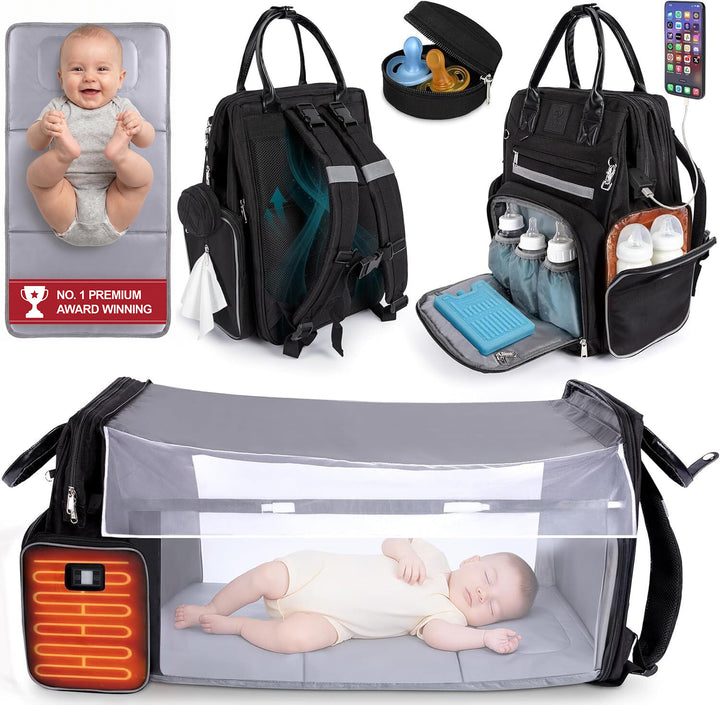
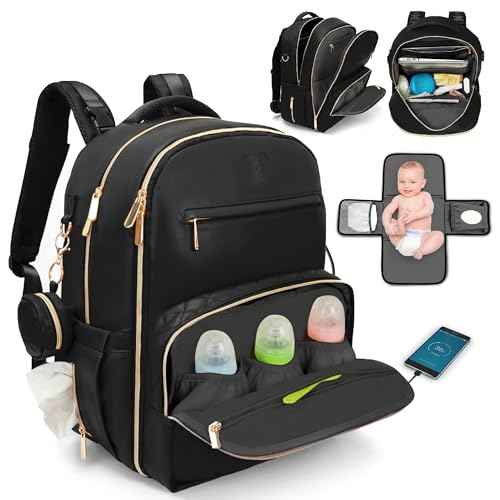
Quick answer: A full diaper bag packing list for a newborn (0–3 months) looks like this: 8–10 diapers, 60+ wipes, diaper cream, 3 changes of clothes, 3 bottles, formula or breast milk, 3 burp cloths, 2 pacifiers, a changing pad, hand sanitizer, and your own personal items (phone, wallet, keys). All packed up, that kit weighs around 7–9 lbs. The bag that holds all of it without a fight: the JustBaby Luv™ Smart Diaper Bag ($129), which fits everything into 15 organized pockets, plus a built-in 30-inch changing station and heated bottle pockets.
New to this? Start with our guide to the best diaper bag with a changing station for the full picture.
"What do I actually need to pack in this bag?" has to be one of the most common questions new parents ask — usually while standing in the middle of a nursery at 11pm, overwhelmed.
Here's the honest answer: it depends entirely on your baby's age. What a 2-week-old needs and what a 14-month-old needs are two completely different kits. Pack too much, and you're hauling around a bag that weighs more than your baby. Pack too little, and congratulations, you're now the parent sprinting into a drugstore at 7pm because you're out of wipes.
This guide breaks the packing list down by age, plus gives you a quick-grab day-trip checklist and an overnight version, so you're never caught without exactly what you need.
How to Use This Diaper Bag Packing List
The lists below are sorted by three things: your baby's age, how long you're out (day trip vs. overnight), and where you're going (local errands vs. actual travel). Just find the one that matches your situation right now.
Pro tip: Use the JustBaby Luv's 15 dedicated pockets to give every category of item its own permanent spot. Restock after every single outing. Your bag should basically live at 80% packed at all times — the only thing that needs refreshing is the feeding supplies.
Diaper Bag Packing List: Newborn Stage (0–3 Months)
This is the biggest, most loaded kit you'll pack. Your baby's going through 10–12 diaper changes a day, feeding every 2–3 hours, and has zero immune resilience yet. For anything longer than an hour out of the house, every item below is genuinely non-negotiable.
Diapering Supplies
- Diapers × 8–10 — roughly 1 per hour, plus 2–3 extras for a full day out
- Wipes container with 60+ wipes — newborns go through 10–12 a day, and travel-size packs vanish fast
- Diaper cream / zinc oxide paste — travel-size tube; keeps rash at bay from all those changes
- Scented disposal bags × 15 — seal up soiled diapers before tossing them anywhere public
- Changing pad — built-in (JustBaby Luv) or portable (28" minimum)
- Waterproof wet bag — for soiled clothes and used items
- Hand sanitizer × 2 oz — before and after every single change
- Antibacterial surface wipes × 5 — wipe down public changing tables before use, because you never know
Clothing
- Full outfit change × 3 — blowouts are a newborn specialty; always carry more than feels reasonable
- Extra socks × 3 pairs — socks disappear into some kind of void, constantly
- Hat or bonnet — newborns can't regulate their body temperature yet
- Swaddle blanket or muslin × 1 — does triple duty as warmth, nursing cover, and emergency change mat
- Light jacket or zip-up layer — restaurants and stores run cold more often than you'd think
Feeding — Formula Fed
- Bottles × 3 — pre-cleaned and ready to fill
- Pre-measured formula dispensers × 3 — fill at home, add water when you're out
- Bottle warmer OR heated bag pockets — the JustBaby Luv's heated pockets mean you can skip a separate warmer entirely
- Bottle brush + travel soap — worth it on trips over 4 hours
- Burp cloths × 3 — spit-up happens after almost every feed at this stage
Feeding — Breastfeeding
- Nursing cover or lightweight scarf
- Nursing pads × 4 — leaks happen when you least expect them
- Nipple cream — travel-size lanolin
- Expressed milk in bottles × 2 — kept in heated pockets to hold temperature
- Milk storage bags × 5 — if you're planning to pump while out
Comfort
- Pacifiers × 2 — always bring two, because one will hit the floor within minutes
- Pacifier clip/leash
- Baby carrier or wrap — a good hands-free backup when the stroller's not practical
Health
- Saline nasal drops — newborn congestion shows up a lot
- Nasal aspirator (NoseFrida)
- Infant gas drops (simethicone)
- Digital thermometer
- Insurance card photo (a screenshot on your phone works fine)
Your Personal Essentials
- Wallet + keys + phone
- Phone charger (or just use the JustBaby Luv's built-in power bank USB port)
- Sunglasses
- Your own water and snacks — you matter too
Total packed weight estimate: 8–10 lbs
Diaper Bag Packing List: Infant Stage (3–6 Months)
Feeding slows down just a bit, and the kit gets a little lighter, though feeding supplies are still the bulk of it.
Diapering
- Diapers × 6–8
- Wipes × 50
- Diaper cream
- Disposal bags × 10
- Changing pad
- Wet bag
- Hand sanitizer
Clothing
- Full outfit × 2
- Extra socks × 2
- Hat
- Light layer
- Muslin
Feeding
- Bottles × 2–3
- Formula dispensers or ready-to-feed × 3
- Heated pockets loaded
- Burp cloths × 2
- Nursing pads (if breastfeeding)
Entertainment (Starting 3 Months)
- High-contrast black and white card × 1
- Small soft toy or crinkle toy
- Teething ring (refrigerate before heading out)
Comfort
- Pacifiers × 2
- Pacifier clip
- Small comfort blanket
Total packed weight estimate: 7–8 lbs
Diaper Bag Packing List: Infant Stage (6–12 Months)
Solid foods enter the picture, and the kit starts shifting from pure feeding logistics toward food and entertainment.
Diapering
- Diapers × 4–6
- Wipes × 40
- Diaper cream
- Disposal bags × 8
- Changing pad
- Wet bag
- Hand sanitizer
Clothing
- Full outfit × 1–2
- Extra socks × 1
- Light layer
Feeding
- Bottles × 1–2
- Baby food pouches × 3–4 (no refrigeration needed)
- Baby spoon
- Silicone bib × 1
- Snack container (puffs, teething crackers)
- Sippy cup with water
- Burp cloth × 1
Entertainment (6–12 Months)
- Teething rings × 2
- Soft board book × 1
- Small rattle
- Stacking cups
Total packed weight estimate: 6–7 lbs
Diaper Bag Packing List: Toddler Stage (12–24 Months)
Things get leaner here. Your toddler's a bit more self-sufficient with feeding, and entertainment starts pulling more weight (literally and figuratively) in the bag.
Diapering
- Diapers × 3–4
- Wipes × 30
- Diaper cream
- Disposal bags × 5
- Changing pad
- Hand sanitizer
Clothing
- One full change of clothes
- Extra socks
Snacks and Drinks
- Snack pouches or crackers × 2
- Sippy cup or water bottle
- Utensils
- Silicone bib
Entertainment
- 2–3 small toys
- Books
- Tablet with downloaded content (for true emergencies)
Total packed weight estimate: 4–5 lbs
Quick-Reference Checklists by Outing Type
Day Trip Checklist (4–8 Hours)
- Age-appropriate diapers (see chart above)
- Wipes
- Diaper cream
- Changing pad
- 1–2 outfit changes
- Feeding supplies for 2–3 feeds
- Snacks
- Water
- 2 entertainment items
- Pacifiers
- Hand sanitizer
- Phone + charger
Overnight Trip Checklist (Add These On Top)
- Everything from the day trip list, doubled
- Night diapers × 4
- Sleep sack or swaddle
- White noise machine (travel size)
- Nightlight
- Blackout curtain clips
- Baby's bedtime routine items (lotion, bath essentials)
- Full health kit (Tylenol, Motrin, thermometer)
- Baby's vaccination records (digital copy)
Air Travel Checklist (Add to Day Trip List)
- 1 extra outfit just for the flight
- Extra wipes (double your usual amount)
- Formula/milk for the full flight, kept in heated pockets
- Birth certificate or passport
- Insurance card
- Download content to the tablet before boarding
- A small comfort toy
- Noise-canceling headphones (these are for you)
The Most Commonly Forgotten Items
Based on parent surveys, these are the things people leave behind more than anything else:
- The diaper cream — only remembered once the first rash shows up
- The second pacifier — the first one takes a dive under restaurant furniture, guaranteed
- Extra socks — they vanish somewhere around car seat installation
- The phone charger — discovered dead around hour 5 of a day trip
- Burp cloths — always, somehow, mid-cycle in the laundry
- Baby's hat — abandoned on a changing table somewhere
- Your own snacks — a hungry parent makes questionable parenting decisions
The fix? Give these items a permanent home in your diaper bag. The JustBaby Luv's 15 pockets mean each one has a designated spot. After every outing, run a quick 60-second restock of these seven items and you'll never be caught off guard again.
How to Pack a Diaper Bag for Maximum Efficiency
The 3-Zone System
Parents who've truly optimized their routine tend to use a three-zone setup inside the bag.
Zone 1 — No-Look Access (top pocket / exterior): Stuff you need without opening the bag or even looking. Pacifier, wipes, hand sanitizer, your keys and phone.
Zone 2 — One-Open Access (top of main compartment): Items you reach for at every single change. Diapers stacked flat, diaper cream, disposal bags, a small burp cloth.
Zone 3 — Session Items (bottom of main compartment): Stuff you use once or twice per outing. Extra outfit changes, bottles (if they're not in side pockets), your health kit.
The JustBaby Luv was actually built around this exact three-zone idea — the top grab pocket, side bottle pockets, and main compartment line up naturally with Zones 1, 2, and 3.
Restock Routine (60 Seconds, Right After Each Outing)
- Count diapers — top back up to your age-appropriate number
- Check the wipes container — refill if it's under 20
- Replace any used outfit changes
- Clean and reload bottles
- Check pacifier supply
- Plug in the power bank to recharge
Restock the second you walk back in the door, and the bag stays ready to go at all times. The worst move is putting it off until "right before the next trip" — because the next trip always starts about 10 minutes before you're actually ready for it.
Diaper Bag Essentials Comparison: By Baby Age (Summary)
| Item | 0–3 Months | 3–6 Months | 6–12 Months | 12–24 Months |
|---|---|---|---|---|
| Diapers | 8–10 | 6–8 | 4–6 | 3–4 |
| Outfit changes | 3 | 2 | 1–2 | 1 |
| Bottles | 3 | 2–3 | 1–2 | 0–1 |
| Burp cloths | 3 | 2 | 1 | 0 |
| Baby food | None | None | 3–4 pouches | Snacks |
| Entertainment | None | 1 simple toy | 2–3 toys | 3–4 items |
| Est. packed weight | 8–10 lbs | 7–8 lbs | 6–7 lbs | 4–5 lbs |
Frequently Asked Questions: Diaper Bag Packing List
How many diapers should I pack in my diaper bag?
Good rule of thumb: 1 diaper per hour, plus 2–3 extras for the unexpected. A 6-hour outing with a newborn means 8–10 diapers. A 4-hour outing with a 6-month-old means 6–7. For overnight trips, just double your day-trip count and toss in 4 night diapers on top.
What are the absolute essentials in a diaper bag?
Five things aren't up for debate: age-appropriate diapers in enough quantity, wipes (60+ for newborns), a changing pad with a waterproof surface, a full outfit change, and feeding supplies to cover the whole outing. Just about everything else can be improvised in a pinch — these five really can't.
How do you pack a diaper bag for a newborn?
Think in three zones: top pocket for no-look items like wipes, pacifier, and hand sanitizer; top of the main compartment for change-station supplies (diapers, cream, disposal bags); side pockets for bottles (heated ones if you've got them); and the main compartment for clothing changes and feeding backup. The JustBaby Luv's 15-pocket setup gives every category its own home.
What should I keep in my diaper bag at all times?
Keep a permanent base kit going: 3–4 diapers as a minimum top-up, a wipes container, diaper cream, hand sanitizer, pacifiers, and one outfit change. Add fresh feeding supplies right before each outing. That way the bag's basically always 70% ready, and all you're doing before you leave is topping off feeding stuff.
How do you organize a diaper bag efficiently?
Use the 3-Zone system: Zone 1 (no-look pocket) for grab-and-go items like wipes and pacifiers, Zone 2 (top of the main bag) for change supplies you reach for constantly, and Zone 3 (bottom of the bag) for things you only use once or twice, like an extra outfit. Give everything a permanent spot, and restock within 60 seconds of getting home.
Do you need a wet bag in a diaper bag?
Yes, absolutely. A waterproof wet bag compartment keeps soiled diapers, wet clothes, and used items away from your clean supplies. Go with a bag that has a dedicated, sealed compartment rather than a loose wet bag insert that just slides around and eventually leaks anyway.
The Best Diaper Bag for This Packing List
Everything on this list needs somewhere to actually live in your bag. That means you really need 12+ organized pockets, a built-in changing station of at least 28 inches, side-accessible heated bottle pockets, and a dedicated waterproof wet bag compartment.
The JustBaby Luv™ Smart Diaper Bag was basically built around this exact packing list:
- 15 organized pockets in 31 liters — everything above gets a permanent home
- 30-inch fold-out changing station — deploys in under 10 seconds
- Patent-pending heated bottle pockets — formula stays at 65°C for 6+ hours
- Solar-rechargeable power bank — phone stays charged for the whole outing
- Dedicated waterproof wet bag compartment
- Airline personal item approved — 16.5" × 14" × 8"
→ Shop the JustBaby Luv Smart Diaper Bag — $129, Free US Shipping
Related Guides
- How to Choose a Diaper Bag: Complete 2026 Guide
- Best Diaper Bag Backpacks 2026
- Best Diaper Bag With Changing Station 2026
- Baby Travel Checklist 2026: 47 Essential Items
Related reading
About the author
Ana Popescu – Mom, Former Daycare Owner & Early Childhood Expert
Ana is a mom of two, former daycare owner, and experienced school teacher. She specializes in early childhood care and development, offering practical advice on baby care, toddler behavior, and child growth. At JustBaby Luv, Ana combines her personal and professional expertise to support families and help them thrive in the early years.